SAXOPHONE
Learning saxophone as an adult: Harris’s advice
 Harris, interviewed by LMT Music Academy5 October 2026 • 6 min read
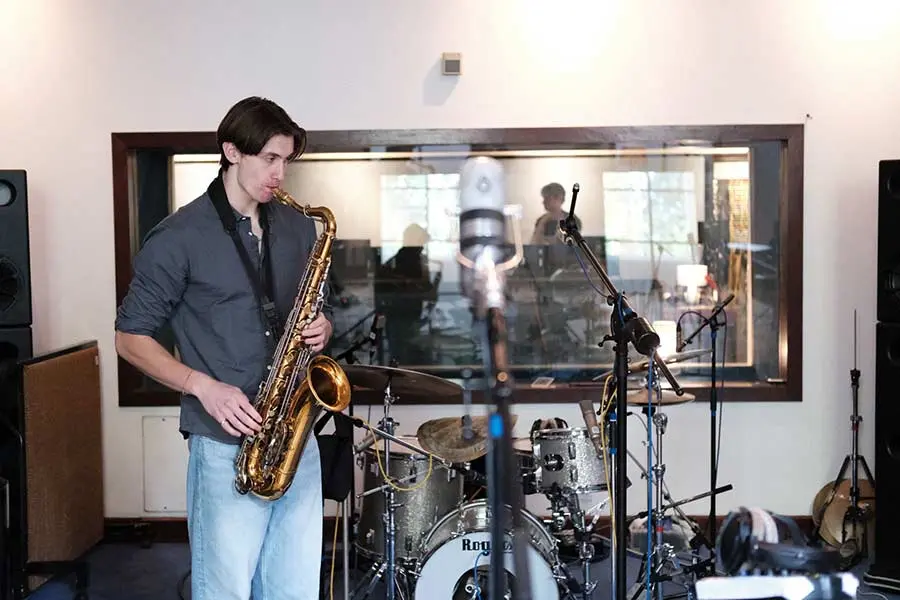
Harris teaches saxophone at LMT Music Academy in Fitzrovia, London. He trained classically, studied jazz at the Junior Birmingham Conservatoire and holds Level 1 and Level 2 jazz diplomas (ALCM, DipLCM). LMT Music Academy asked him the questions adult beginners ask us most. His answers are below, lightly edited.
Can an adult learn the saxophone from scratch?
“Absolutely. Adults have one big advantage: they usually know what they want to get out of it. A lot of my students come in and say, ‘In a few months, I want to be able to play this tune.’ Then we build the lessons around it: what key it's in, what the main themes are, which exercises support it. That gives a really clear pathway.”
“Adults also cope better with the weight of the instrument, which can be a real limit for young children. If you practise for long periods, use a harness that holds the weight on your shoulders rather than your neck. I use one for my tenor: the JazzLab saXholder. It's really strong and folds up into nothing. And watch your posture. Many adults play hunched over, with the saxophone pulling them down. Good posture habits prevent unnecessary injuries.”
Am I too old to start?
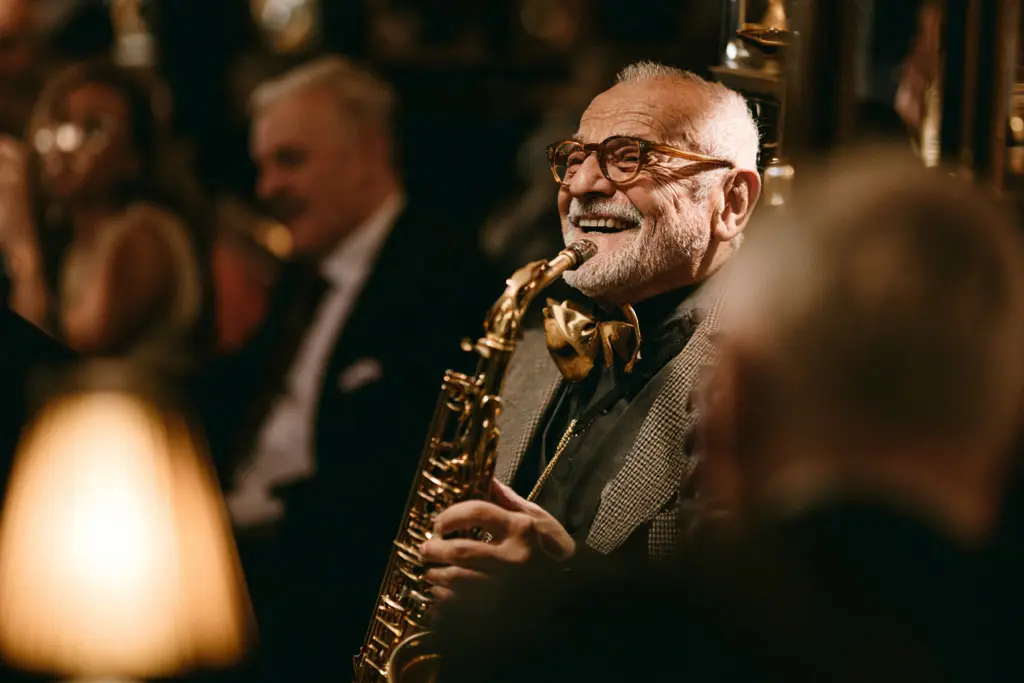
“Absolutely not. Someone can come in at 80: if they've got the time, want to learn and are in the right mindset, they can do it. There are extra benefits too. We work on breath support away from the instrument. One exercise I like: hold a sheet of paper against the wall with your breath alone, and we time how long you can keep it there. Airflow work like that is good at any age, and learning something new keeps your mind active all your life.”
What happens in your first saxophone lesson?
“My aim is that a student finishes the first lesson thinking: I've done something, so I can do more. Someone who has never played will almost always produce a sound in the first lesson. By the end they've played something attainable: it might be a tune using only G, A and B.”
“The set-up matters. When a new student is borrowing a saxophone, I make sure we have a strength 2 and a strength 2½ reed. If the 2½ is too hard, we go down to the 2, and that usually gets the sound coming. A reed meant for a more advanced player makes everything harder.”
“You don't need to prepare anything. Bring the right attitude. You don't need to watch YouTube videos on how to play first; you come to the lesson to learn. Starting from scratch makes the first lesson more exciting.”

Is the saxophone difficult to learn?
“The usual expectation with a reed instrument is that you blow with full force and a massive sound comes out. In reality, the hardest part at first is the embouchure: the mouth position on the mouthpiece. Beginners tend to put their teeth on top, their lip on the bottom, and squeeze too hard. They think they need to tense up and push the air out. A much better sound comes when you relax and blow the air through with a supportive cushion from the lips.”
“The other surprise is tuning. On the piano you press a key and the note is there, in tune. On the saxophone you make the pitch with your mouth and your air support. When students go up the instrument they tend to squeeze, and the note goes sharp. So we work a lot with a tuner. Intonation isn't automatic on the saxophone.”
How quickly will I progress?
“It depends on how much you put in. A beginner who practises well can, within about three months, play simple duets and short beginner pieces in easy keys: a four- or five-line song in G major, for example.”
“One student came to me unable to make a single sound. She practised well, and about five months later she was playing full-page songs from books of well-known tunes, ABBA among them, while I worked the theory in as we went.”
How much should I practise?
“Little and often is so much better than nothing at all. If you can, 15 to 30 minutes a day is plenty to make steady progress. It's meant to be a fun activity: do it while you feel motivated, then put it down.”
“On a really busy day, put the mouthpiece on the neck of the saxophone and blow quiet long tones for five to ten minutes. That is 100% better than doing nothing. The breath work and the embouchure placement do more than you'd think, and one day you notice it feels much more secure.”
Do I need to read music?
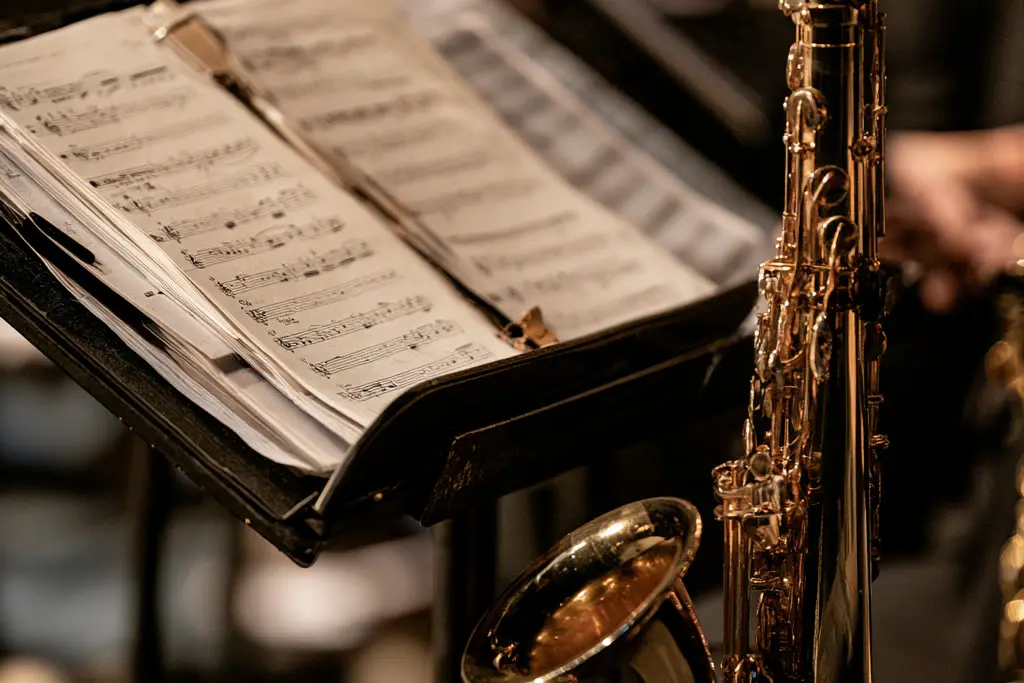
“No. Reading music has lots of benefits and makes some things quicker, but I came into jazz with my ears, not my eyes. Listening taught me more than written music ever did. There's a lot you can do by ear: copying phrases, singing a melody, transcribing, aural exercises away from the instrument.”
How Harris adapts lessons to each student
“If a student wants to learn to improvise, I'll bring in theory, but I always put it straight onto the instrument. We never sit for 15 minutes while I write on paper. Everything goes into the fingers and the muscle memory.”
“One student loves to come in and play duets for 45 minutes. That's her creative outlet from work, and she learns along the way. Others bring a book of pieces they love. Then we choose what's manageable in a few weeks, get really familiar with the key, and work towards it, so they reach a goal and feel proud of it.”
Why some students progress and others struggle
“Students who struggle tend to lose sight of why they started. Often they expected it to be easier. Part of that is the material. If someone is clearly struggling, don't hammer them with the same thing. Take it a step back: what can you achieve in one or two weeks? Then they can say, ‘I've done that, so I can do this.’”
How Harris corrects mistakes
“If a student makes a mistake and keeps going, I let them play and I observe. Afterwards I ask: how did you feel about that? What went well? Start with a positive. Then: was anything difficult? Very often they spot it themselves: ‘It was that bar, that F sharp.’ Then we try it a different way and they hear it sound better. There's no reason to tell a student ‘that was wrong.’ I always want students to leave happy.”

Playing with other musicians
When should you start? “Right from the start. Playing with others is motivating, fun and inclusive, and with supportive people it's a very healthy environment for a beginner. If you can read the root notes slowly and hold each for four beats, brilliant: you can play that role while someone else plays something else. Progress is progress, at any level.”
What does it teach you? “Timing feels different with a drummer playing a great groove than with a metronome: the exercise stops feeling like an exercise. You learn to listen inside and out: does my sound blend, does my style fit, how are the guitar and piano working together? In a saxophone section, a big solo sound doesn't work if you're on second alto. You learn where you sit in the band. And group improvisation, such as call and response or passing a two-bar phrase round the circle and answering the one before you, is a skill you simply don't get one-to-one.”
“When I front a quartet or quintet, I also lead: I can slow the band down at the end of a piece through how I play and how I move. You don't learn that in a one-to-one lesson.”
How Harris started on the saxophone
“My father had bought my mum a saxophone as an anniversary present, but bringing up children and working, she never had time to play it. I'd played recorder in group classes when I was very young, so when I picked up the saxophone I could instantly play a C major scale. Being able to pick up an instrument and straight away do something I recognised gave me the motivation: this is something I can do. From there I took lessons and trained classically.”
“I liked classical, but I didn't love it as much. My dad always had gospel, soul and funk albums playing in the house. He gave me a small iPod full of them and said: whenever you're doing your homework or walking the dog, be listening. Players like Kirk Whalum and Bob Reynolds pushed me towards jazz, and I went to the Junior Birmingham Conservatoire to learn how to sound like that.”
What makes the saxophone special?
“For me, the saxophone really sings. I sang from a very young age, and singing a melody is very different from just playing one. If you can make the saxophone sing, you're winning. Kirk Whalum can play a few notes and you feel it right in your heart. It's a very free-blowing instrument, with a huge dynamic range.”
“It's also very versatile, which makes it approachable. Some students only want classical. Some want the most extreme pop licks. Some want to play like Charlie Parker. The saxophone fits all of them.”
Learn with Harris
Harris teaches adults at every level at our Fitzrovia studio. Read the full interview with Harris, more on Harris's profile, or see our saxophone lessons in London.